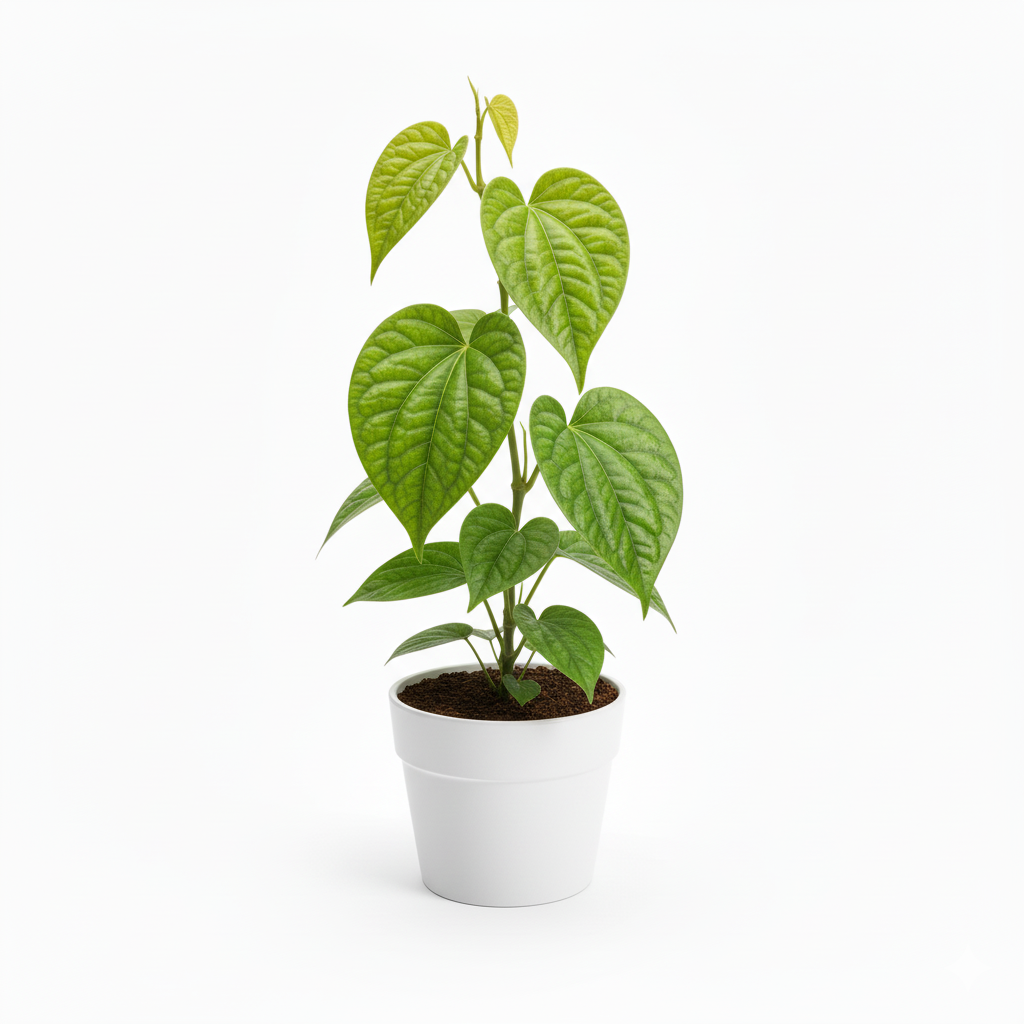
�� General Overview Scientific name: Piper betle Common name: Banarasi Betel Leaf / Banarasi Paan Family: Piperaceae Origin: Varanasi and surrounding districts (like Chandauli, Mirzapur, and Ghazipur) Type: Tropical perennial vine �� Distinctive Features of Banarasi Betel Leaf Feature Description Shape Heart-shaped, broad with a smooth, glossy surface Color Deep green with a shiny texture Taste Mildly pungent and aromatic, slightly sweet aftertaste Aroma Strong and pleasant fragrance Texture Soft and thin, ideal for folding into paan preparations Specialty Often used for “Meetha Paan” and ceremonial offerings �� Growing Conditions Climate: Warm and humid, typical of tropical and subtropical regions. Temperature: Best between 20°C–35°C. Sensitive to frost and cold winds. Light: Requires partial shade; direct sunlight can scorch the leaves. Soil: Fertile, well-drained loamy soil rich in organic matter; pH 6–7. Water: Regular watering to maintain moisture, but avoid waterlogging. �� Propagation & Cultivation Propagation: By stem cuttings (~20–25 cm long, with 3–4 nodes). Planting time: Monsoon or early spring. Spacing: Around 45–60 cm between plants in traditional boroj (betel vine huts). Support: Requires bamboo trellises or ropes to climb. Mulching: Helps retain soil moisture and prevent weeds. �� Traditional Cultivation (Boroj System) In Banaras, the vines are grown inside a “boroj”, a thatched enclosure made of bamboo, straw, and leaves that: Provides controlled shade and humidity. Protects plants from wind and cold. Allows for regular irrigation and pruning. �� Care and Maintenance Watering: Keep soil moist but not soggy. Pruning: Regularly trim to encourage lateral growth. Fertilization: Apply organic manure (cow dung compost, neem cake) every 30–45 days. Pests: Watch for aphids, mealybugs, and fungal leaf spots — neem oil spray works well as a natural remedy. �� Cultural and Economic Importance Banarasi paan is a symbol of hospitality and tradition in North India. Commonly used in weddings, rituals, and after meals as a mouth freshener. Its leaves contain essential oils with mild antiseptic and digestive properties.