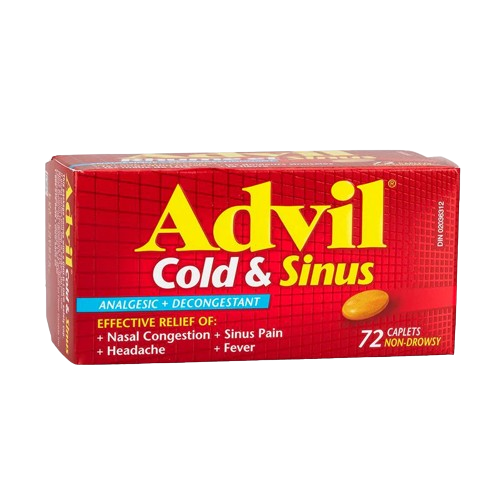
Description Availability of Advil Cold & Sinus in Pakistan Advil Cold & Sinus 72-count caplets are sold in Pakistan, imported from Canada. Product Details Advil Cold & Sinus contains the decongestant pseudoephedrine and is used to temporarily relieve symptoms associated with the common cold or flu, such as headache, fever, sinus pressure, nasal congestion, and minor body aches and pains. Dosage and Usage Adults and children 12 years and over can take 1 caplet every 4 to 6 hours while symptoms persist, up to a maximum of 6 caplets in a 24-hour period. Children under 12 should not use this product. For occasional sleeplessness associated with minor aches and pains, Advil PM may be a better option as it does not contain ingredients that cause drowsiness. Interactions with Other Medications Do not take Advil Cold & Sinus with any other product containing ibuprofen, pseudoephedrine, phenylephrine or chlorpheniramine. Advil Cold & Sinus may interact with a number of other medications, including: Acetaminophen Acetylsalicylic acid (ASA) Allergy medications Anticoagulants (blood thinners) Antidepressants Anti-hypertensives (blood pressure medications) Antibiotics Benzodiazepines Corticosteroids Diabetes medications Digoxin Diuretics Lithium Methotrexate Monoamine Oxidase Inhibitors (MAOIs) Other NSAIDs like naproxen and ibuprofen Phenytoin Probenecid Thyroxine Tranquilizers or other sedating drugs Talk to your doctor or pharmacist before taking Advil Cold & Sinus if you are taking any prescription or non-prescription medications. Key Benefits of Advil Cold & Sinus Temporary Relief of Cold and Flu Symptoms Reduces nasal and sinus congestion, sinus pain, fever, headache, sore throat, and body aches associated with the common cold, flu, or sinusitis. Non-Drowsy Formula Advil Cold & Sinus does not contain ingredients that cause drowsiness, unlike some other cold and sinus medications. Key Ingredients Ibuprofen A nonsteroidal anti-inflammatory drug (NSAID) that reduces pain, fever, and inflammation. Pseudoephedrine A decongestant that relieves nasal and sinus congestion by reducing swelling in the nasal passages and sinuses. Mechanism of Action Ibuprofen (NSAID) The principal mechanism of action of ibuprofen and other NSAIDs is the inhibition of prostaglandin biosynthesis. Prostaglandins contribute to inflammation, pain, and fever. Inhibiting their production reduces these symptoms. Pseudoephedrine (Decongestant) Pseudoephedrine is a decongestant that relieves nasal and sinus congestion by reducing swelling in the nasal passages and sinuses. In summary, Advil Cold & Sinus works through a two-pronged mechanism: The ibuprofen (NSAID) reduces inflammation, pain, and fever by inhibiting prostaglandin production. The pseudoephedrine decongestant relieves nasal and sinus congestion by shrinking swollen blood vessels and tissues. Ibuprofen is synthesized through a multi-step process involving various chemical reactions. Here are the key steps in the synthesis of ibuprofen: Friedel-Crafts Acylation: Isobutylbenzene is reacted with acetic anhydride in the presence of anhydrous hydrogen fluoride to form 4-isobutylacetophenone. This step involves a Friedel-Crafts acylation reaction, where the isobutylbenzene is acylated by the acetic anhydride. Carbonyl Reduction: The 4-isobutylacetophenone is reduced to form 4-isobutylphenyl-2-propanol. This step involves the reduction of the ketone group to an alcohol group using a reducing agent like sodium borohydride or a bio-friendly method using Daucus carota root (carrots). Chloride Substitution: The 4-isobutylphenyl-2-propanol is substituted with chlorine under acidic conditions to form 4-chloro-2-(4-isobutylphenyl)propanol. This step involves an SN1 mechanism, where the chloride ion replaces the hydroxyl group. Grignard Reaction: The 4-chloro-2-(4-isobutylphenyl)propanol is converted to a Grignard reagent by reacting it with magnesium in refluxing ether. The Grignard reagent is then reacted with carbon dioxide to form 4-(4-isobutylphenyl)-2-oxobutanoic acid. This step involves the nucleophilic attack of the Grignard reagent on carbon dioxide. Protonation: The 4-(4-isobutylphenyl)-2-oxobutanoic acid is protonated to form ibuprofen. This final step involves the addition of a proton to the oxo group, resulting in the formation of the carboxylic acid group. Key Precautions Stomach/GI Issues Increased risk of severe stomach bleeding, especially in those 60 years and older or with a history of GI disorders like heartburn or ulcers. Cardiovascular Conditions Increased risk of heart attack, heart failure, and stroke. Use caution in those with hypertension, heart disease, or recent stroke. Other Medical Conditions Use with caution in those with liver cirrhosis, kidney disease, asthma, thyroid disease, or diabetes. Avoid use if allergic to ibuprofen, pseudoephedrine, or other NSAIDs. Do not use if taking MAOIs within the last 14 days. Pregnancy and Breastfeeding Not recommended during pregnancy, especially after 20 weeks. Use with caution in breastfeeding mothers. Dietary Restrictions Alcohol Increased risk of GI bleeding with concurrent use of 3 or more alcoholic drinks per day. Other Pain Relievers Avoid using other pain relievers, decongestants, or NSAIDs concurrently with Advil Cold & Sinus. Dosage Adults and children 12 years and over can take 1 caplet every 4 to 6 hours while symptoms persist, up to a maximum of 6 caplets in a 24-hour period. Children under 12 should not use this product. For occasional sleeplessness associated with minor aches and pains, Advil PM may be a better option as it does not contain ingredients that cause drowsiness. Storage Advil Cold & Sinus should be stored in tightly closed containers at room temperature (15-30°C). Keep out of reach of children. Reviews Advil Cold & Sinus has an average rating of 7.5 out of 10 from 30 reviews on Drugs.com. 72% of reviewers reported a positive experience, while 24% reported a negative experience. Many users found it effective for relieving sinus pain, congestion, headaches, and other cold/flu symptoms. Some users experienced side effects like dizziness and drowsiness, despite it being a non-drowsy formula.